Click here to download Ethiopian Journal of Legal Studies Editorial Rules
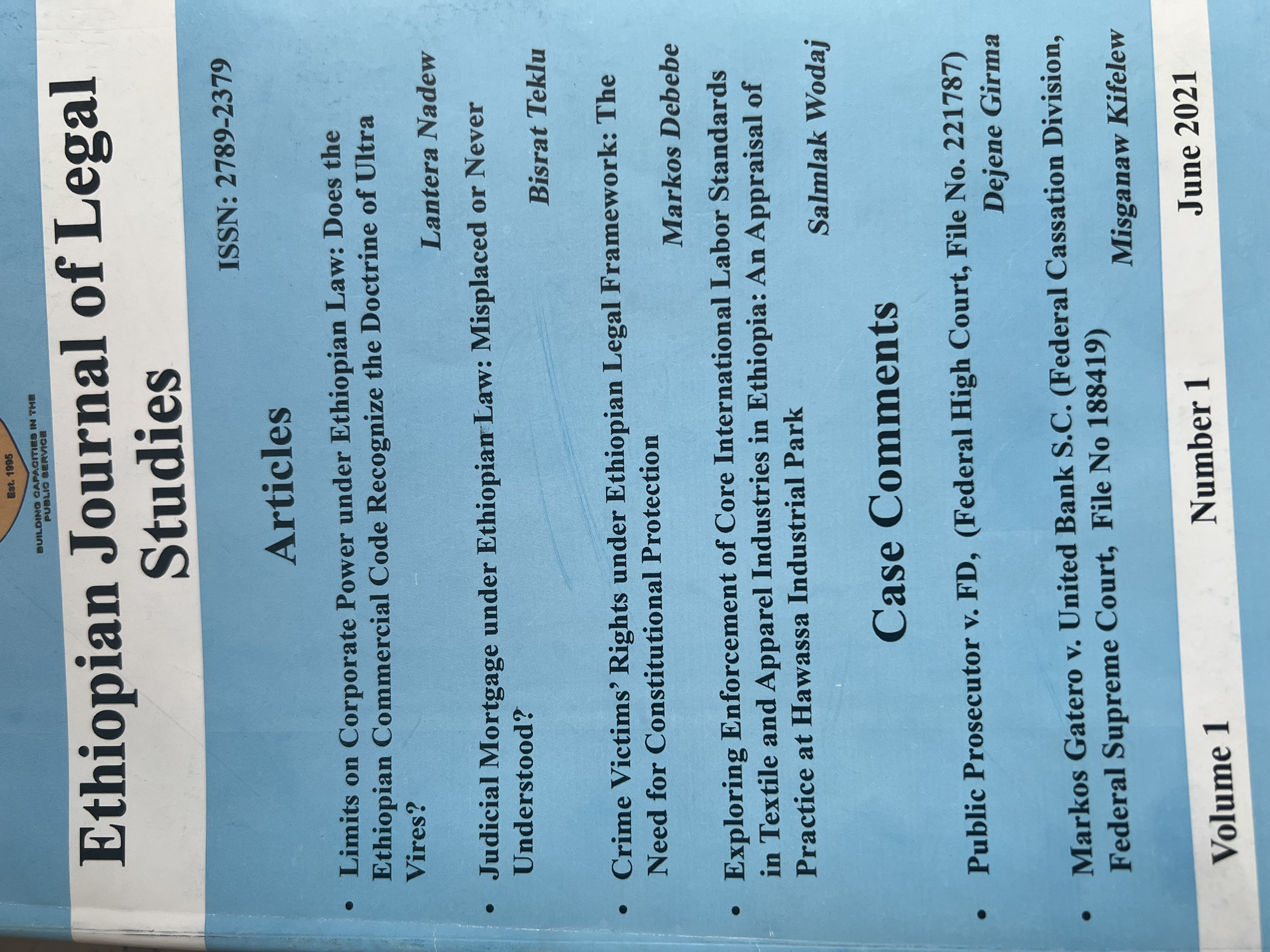
The Ethiopian Journal of Legal Studies (EJoLS) has a motto of advancing the Ethiopian legal literature a step ahead. EJoLS is a double-blind peer reviewed biannual journal that publishes articles of high standard triggering toward tackling national, regional or international legal issues. EJoLS is published twice a year (June and December each year) by the School of Law, Ethiopian Civil Service University.
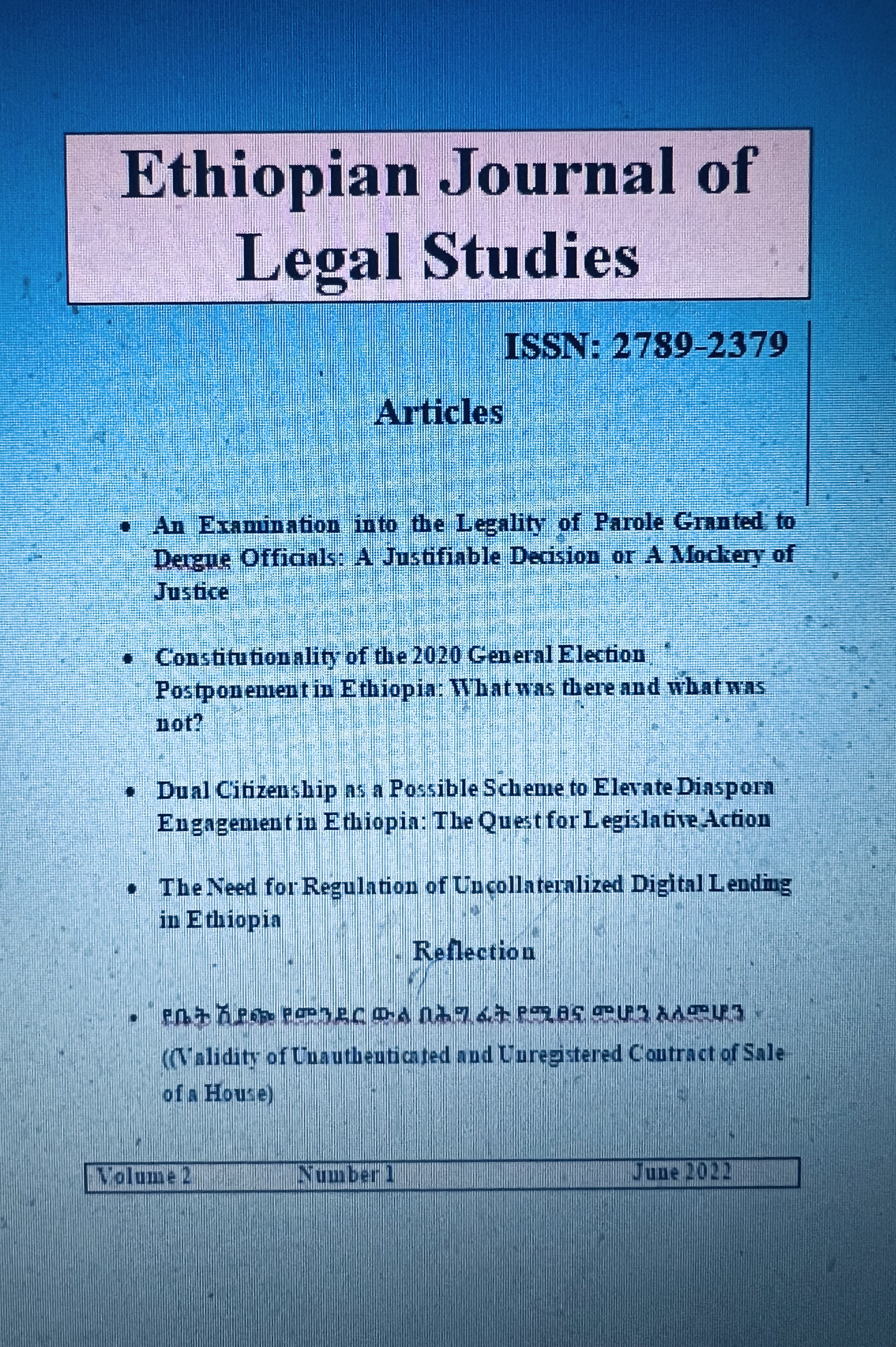
The Ethiopian Journal of Legal Studies (EJoLS) has a motto of advancing the Ethiopian legal literature a step ahead. EJoLS is a double-blind peer reviewed biannual journal that publishes articles of high standard triggering toward tackling national, regional or international legal issues.
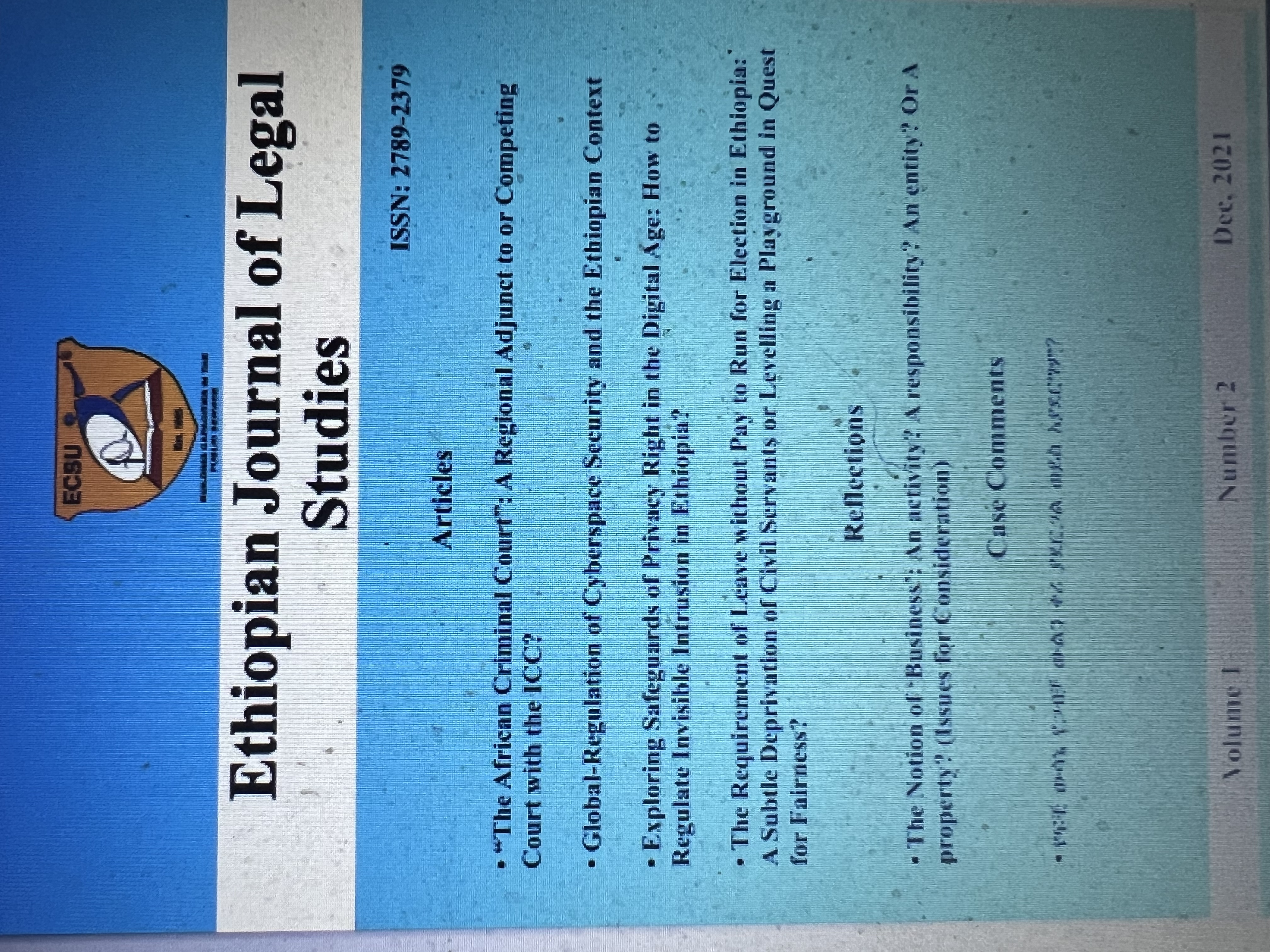
The Ethiopian Journal of Legal Studies (EJoLS) has a motto of advancing the Ethiopian legal
literature a step ahead. EJoLS is a double-blind peer reviewed biannual journal that publishes
articles of high standard triggering toward tackling national, regional or international socio-legal
issues.
Due to rigorous publication requirements several submissions were either disregarded or sent
back to authors for possible modification in accordance with the acceptability guidelines of the
EJoLS. The Editorial Board of the Journal finally decided four best articles that would contribute
to the Ethiopian legal literature and offer policy options, a reflection that would settle several
issues involving the notion of business and an instructive case comment to be published in this
issue.
The first article examines the Malabo Protocol that apparently extends the scope African Court
of Justice and Human Rights on Human Rights. The Protocol included international criminal
section to the Human Rights and General Affairs Section of the Court. This necessarily ensues
jurisdictional issues, whether the Protocol simply expands the scope of Court or supportive law
of International Criminal Court. Other related issues, rules, concepts and doctrines are
sufficiently discussed in the article. The second article assess national and global cyber security
regulation. Cybercrime is the issue of global community. Perpetrators enemies can knock all
doors and destroy or steal asset or commit undefendable crimes. Cyber security issue is a current
issue in Ethiopia. Ethiopia’s enemies not ony fighting in the war fronts but invisible war is going
on through cyber space. As we have law of war cybercrime or cyber war has to be regulated and
controlled. The article endeavors to shed light on the battle for regulation of cyberspace. The
third article deals with privacy issues. Everybody aspires certain acts or actions to be kept secret.
There are boundaries one to know about one’s identify, body, relationship and so forth. But the
digital age, it has been hard to protect privacy. Today, surveillance cameras are planted in all
corners of city, government offices, private businesses, in transportation services and so forth.
However, individuals’ interest for privacy and security interest has to be well balanced. The
article examines how privacy and security interest may be regulated. The fourth articles assess
Ethiopian election law. It examines how the current election law subtly denies Ethiopian civil
servants to run for elected offices. It argues that given the poor economic the requirement to take
leave without pay restrains civil servants from running for elected offices. The author argues that
how a civil servant that lives from cheque to cheque can stay for moths without pay? The law
thus forces Ethiopian civil servants either run for election or lose your life. The article assesses
intern nation law, experiences of other jurisdiction and suggested for modification of the current
Ethiopian election law